Sunday, May 4, 2014

A Restrospective

I’ve learned a great deal of information this past semester in Writing 140, whether it’s about research, collaboration, or even about myself. Research is something that is necessary for almost any paper because there is often going to be background information that helps to strengthen arguments and make conclusions that emphasize the thesis of the paper. Along with that, research isn’t incredibly challenging, which makes it more appealing to both the writer, who gets to learn more about the topic in question, and the reader, who finds the arguments made to be more legitimate if sources can be cited. I’ve learned that collaboration with others is important in writing because ideas can spring up from that discussion that one member might not have been able to think of themselves previously. This sort of discussion is also useful in other fields, even engineering, where new ideas are necessary in order to solve problems that exist in the world today.


This class has confirmed my suspicion that practicing can help to develop skills, even if they seem to be nearly impossible to improve. I felt like I wasn’t ever going to improve my writing skills because I didn’t have the natural talent to write something that other people would want to read or enjoy reading, but over this semester, I’ve found that my writing has been more appealing to read and writing has become more interesting, despite how challenging it can be.

Thursday, April 24, 2014

A5 Post #2: Does an Audience Matter?

The audience is vital to rhetorically ethical discussions because without them, there's really no need to have the discussion in the first place. They watch what happens in this discussion and take sides with one side of an argument. Although, in the case of this sort of academic argument where the goal is to have everyone be a little wiser, the audience doesn't really take sides, but simply manages to learn more about the differences between the various racial and ethnic groups coexisting in the society. There is still a group of people listening who will have various opinions of the speakers and of the issues discussed after any sort of event. In fact, the opinion of the audience often affects the direction of the discussion as a whole.


Along with that, the audience also, with the power of their opinion keeps the discussion intelligent as the people in the discussion want to make sure that the audience is learning from the arguments. The audience makes sure that those involved in the discussion are conversing in a way that doesn't involve attacks on others in the discussion or takes situations out of context. In doing such things, the audience plays a significant role in having rhetorically ethical discussions.

Saturday, April 19, 2014

A5 Post #1: Bad Faith Arguments: Rewarded or Punished?

Bad faith arguments are those in which false arguments are supported, despite the fact that the arguments are wrong. In a sense, it's deceiving people who know little about a subject by trying to argue for the wrong side, despite the fact that there is evidence against the incorrect argument. This is completely illogical to do, especially because it causes inefficiency in research teams that they search to support arguments that even they likely know to be false. In our society, these arguments tend to be ridiculed and looked down upon, especially when these arguments are made by politicians or news networks.


Some great of examples of bad faith argumentation come up on Stephen Colbert Show. These arguments tend to come the from the Fox New network and often come with a Republican spin. Some arguments that have come up cam be controversial, but the added humor from the audience and the faces that Colbert manages to pull off help to at least try to pull the viewers to Colbert's side of the argument. For example, Colbert takes the argument by Donald Trump that people should not spend so much money on fighting global warming and makes it seem ridiculous by bringing up all the things Trump himself has purchased with large amounts of money that don't seem to be doing much good to the world. Along with that, Colbert also brings up the fact that Fox News criticized Al Gore's book on climate change because it sold at such a low price and makes the comment that he believes in shooting children because of the enormous amount that the Hunger Games film made. This sarcastic comment tries to show how irrational the argument against Gore's book is and also tries to be humorous at the same time. As can be seen through the comments made by Colbert, bad faith arguments are definitely looked down upon and discouraged in our society.


Saturday, April 12, 2014

A4 Post 2: Conventions of Film Noir


Film Noir has many conventions that almost all films tend to follow. From the dark setting to the dark story, the entirety of the genre seems to be about exploring the dark side of urban areas in the United States. Along with that, the films all portray the post-WWII era, so there is an attempt to show the feelings of the soldiers returning from war and the women who have lost their jobs due to this return of soldiers. The main protagonist in these films also tends to have a very ambiguous sense of morale because there really isn't much that they're not willing to do to solve the mystery that is imposed upon them through circumstances created by the directors of the films. Film Noir isn't the most positive genre of movies, but it's very interesting to see how the past is portrayed by these directors from the 90's.

One of the more famous noir films is titled Devil in a Blue Dress. This movie features a black protagonist, which in itself is very nuance as these films tend to have white male protagonists, who is sent on a case to talk to a white woman by the name of Daphne Monet. Throughout the film, there are definitely many dark settings and as the film continues, the story turns dark as the search for a woman changes into a murder mystery. Not only that, but the fact that Ezekiel Rawlins, the main protagonist, is a war veteran definitely taps into the idea that this film is also trying to portray life during the post-war period. For the most part, this films seems to really follow the traditions that previous noir films set for this genre.

The exception to this adherence to tradition is the ending of the film. For the most part, noir films tend to have a very sad and depressing ending, often resulting from spontaneous, unexpected, unwanted conclusions to conflicts set up in the film. Devil in a Blue Dress has an ending that contrasts with this image greatly, the film has Easy Rawlins just talking about his coping and forgetting of the events that had occurred throughout the film. Along with that, the setting at the end is happier than other noir films and supports the idea of family a great deal more.


If there's one thing that Devil in a Blue Dress portrayed properly about the 1940's, it's that there was a "color line" that couldn't be crossed by almost anybody. This relates a great deal to our AMST course because it shows what happens when ethnic difference is not tolerated. Even the rich men in the film feared crossing the color line, which caused the main woman in the film to be rejected by the man running for office: her Creole background caused fear in the politician. It makes sense that there was a sense of fear because there were actually numerous laws that prohibited miscegenation, so being caught would mean immediately being out of the race for he politician, but the fact that these laws existed and caused a politician, who is important and nearly famous, to fear crossing it.

Sunday, April 6, 2014

Social Issue Speaker Series: Andrew McGuire

Listening to Andrew McGuire as part of the Speaker Series at USC was a very interesting experience. He has truly been through quite the experience as he has fought to change the world and make an impact. From making pajamas safer for kids to self-extinguishing cigarettes, he really took the initiative in any issue that he felt was important. To be able to hear from a man who has been so influential throughout his lifetime is incredible and helpful for any future endeavors to make change in the United States.
There were many important lessons to be learned from this speaker, but at the time time, none of them seemed to apply to Writing 140 or the AMST 274 class. For example, he talked about how the main points of advocacy were to walk honestly and ethically. While it is important to follow such guidelines, that really has no relation to film, race, or ethnicity. Another main point was that we would have to outwork and out-think the opposition, which could possibly apply to the effort to reach a state where the United States can have an ethnically diverse community and still be unified as a country, but it's a bit of a stretch.
Overall, this speaker was nice to listen to, as his explanation of advocacy and his story were informative. His advice through the presentation was useful as well.

Thursday, April 3, 2014

A4 Blog Post #1: Article Works Cited Review

In Erenberg’s book, Swingin’the Dream: Big Band Jazz and the Rebirth of American Culture, he explained that both African Americans and White Americans had the same end goals for life. They wished to have “freedom,” “hope,” and “participation,” but the experience that the two groups had were actually very different. African Americans, in their attempt to reach these goals, created bands and played a new form of music to try and gain respect and authority. Unfortunately, things didn’t exactly turn out exactly as expected and, as the author tried to explain in an optimistic manner, African Americans actually never got the respect, the publicity, or even the financial means to continue playing their music for long.


I learned from this book that African Americans were really treated poorly in the time period that Noir film portrays. As a result, the films produced tended to show unfavorable treatment of the African American people, which is rather unfortunate, but accurate. Along with that, the music played in the clubs in these films were usually jazz, which is ironic due to the lack of publicity these musicians would usually get in the time that they were originally played. As interesting of a genre as Noir is, the fact that the accuracy of the times had to portray such discriminatory treatment of African Americans in the cities is rather unfortunate.

Wednesday, March 12, 2014

A3 Post #2: Response to the Magic Negro

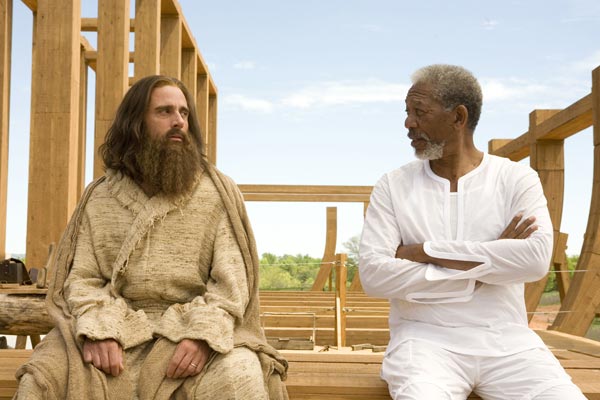
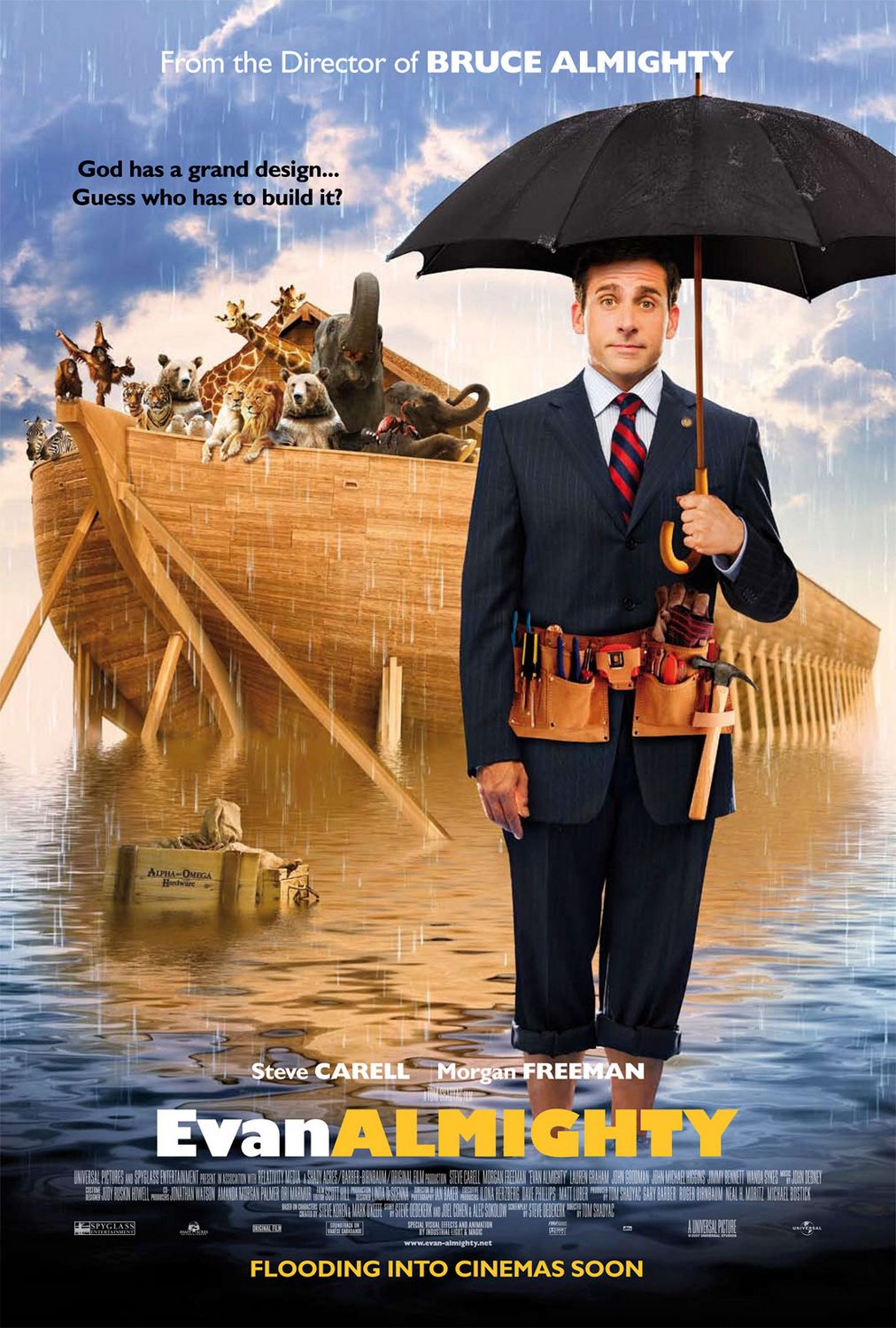
Morgan Freeman was the most static character in the entirety of Evan Almighty, but reviewers of the film did not really seem to notice this. In fact, they seemed to accept the idea that Morgan Freeman portrayed the role of "God" very well. The main focus of reviews seemed to be on the fact that the movie cost over $150 million to produce and wasn't exactly the greatest comedy made. With that fact aside, Morgan Freeman was truly a magic negro because he never really did anything other than tell Evan to simply build the ark. Sure, there was the initial push with the sending of the materials for the ark and the permanent outfit that was fit for Noah, but even then, Freeman himself didn't really show up for most of the miracles that occur throughout the film. There was no development on the part of God in the film, not even a back story or anything. The only information we know about God is from the previous movie, Bruce Almighty. Morgan Freeman's sole purpose in this entire film was simply to get Evan to build the ark, nothing else.

The reviews did seem to notice that Freeman had a static role in the film, but for the most part, they ignored the characters, with the exception of Evan, in favor of criticizing the movie in general. In a movie review on Slate, there was literally a parenthetical citation that noted that Freeman was a magic negro and no other reference to the racial implications of that action. After looking at over a dozen other reviews from various sources from the Wall Street Journal and New York Times to various blogs, there seemed to be little mentioned in regards to the fact that God was black, but perhaps people were simply used to God being played by Morgan Freeman from Bruce Almighty. Whatever the reason, there was not really much commentary on the fact that Morgan Freeman was such a static, "magical negro" character in Evan Almighty.

Wednesday, March 5, 2014

A3 Post #1: Bruce's Successor

For this assignment, I've chosen to examine the movie Evan Almighty, which is the sequel to Bruce Almighty, directed by Tom Shadyac, once again. In the film, there is a key character who returns from the original movie, God, played by Morgan Freeman. He is a perfect example of a "magic negro," who is supposed to be depicting how enlightened the movie is for including a diverse cast, even giving the minority a main character to the story. While God plays a large role, there isn't much of a story about God or much focus on the life of God, despite being such a powerful being.


The main plot of this film is based around the story of Noah's Ark, but with current times, so building an ark seems even more confusing than back in the day, when there was no experience of rain. As Evan is called to build an ark, God is continuously watching over Evan and encouraging him to keep on building the ark, no matter how others think of him. Of course, the story of the film continuously focuses on Evan's life, never really talking or even giving much of a spotlight of God's life.
In this film, God's role was actually not incredibly necessary. His main role was beginning the process of having Evan build the ark in preparation for a flood as well as encouraging Evan along the way. I feel like having any other character start this process could have worked as well. God's role was not really essential as a "magic negro" in this film.

Tuesday, February 18, 2014

Post #4: Completely Unidentified Beings

In a Utopian society, there would be no distinction between people through phenotypic characteristics. No matter what skin tone a person had or where they were born, he or she would be treated as an equal to everyone else in society. Of course, this world would be a perfect society with no wars and a strong belief in the greater good of all mankind. This sort of Utopia is not very likely to exist and, in my opinion, would be impossible to maintain.


We, as humans, have this tendency to notice differences between people. Even people from the same racial group often wear different clothes or act in different ways that we are able to detect and use to distinguish between different people. This rings even truer for people of different skin tones and races. We can clearly see that there is a difference between a white man and a black man and there's nothing necessarily racist about that. In fact, one might even go so far as to say that it's human nature to notice differences in all physical characteristics, and removing that ability to notice the differences is detrimental to the well-being of the human race.

In truth, a world without ethnic identity would be much more peaceful, although not completely without strife. There would still likely be opposing views between people of different mindsets and ways of thinking which could cause a fight to break out. People still have a tendency to quarrel, even if the fight has nothing to do with ethnic differences. At least the world would be a little more peaceful, though. There would be a lower chance of huge wars to break out with the lack of identity. A drawback of this state of living would be that cultures might matter less and the traditions of different groups could fade away. This would be rather unfortunate because the different traditions and cultures of the many countries around the world are what make the world a more interesting place.

Tuesday, February 11, 2014

Blog Post #3: 3rd Rock from the Sun

It would be a very strange experience to suddenly be unable to understand why there are distinctions between people of different races and ethnic groups. In order to fit it, I would try to observe others, perhaps in the setting of a city park or in a theme park, while wearing sunglasses in order to seem a little less creepy.


If that wasn't enough observation, I would go, as Dick did, and ask others about what sort of distinction there is between people. The answer, most likely, would be phenotypic differences between people causes there to be grouping between people of similar skin color and as a result, there is also an immediate stereotype placed upon that group that is preconceived through literature, media, and observation of society.


Armed with this new information, I would go and search for a group of people who looked most similar to myself and use the trial and error method that was used by Dick and his family. Of course, by using phenotypic similarities, I would likely have a lower chance of offending others because people tend to focus more on the outside, visible traits than on anything else when grouping others into different racial categories.

Thursday, January 30, 2014

Post #2: Was Annie Effective?

After looking at the many advertisements from Popeyes Louisiana Kitchen that involved Annie the Chicken Queen, I decided that it was very effective. As racially insensitive as the new spokesperson was, she was a very good at her job. The advertisements all made me want to buy some chicken, biscuits, or whatever else she was selling. Perhaps it's because the stereotype of a "mammy" figure like Annie suggests good food in my mind. Perhaps, like when people in the past thought of Uncle Ben and Aunt Jemima, I just expect good food to come from a kitchen that had a black woman in an apron working in it.


In order to support this outrageous claim, though, I decided that some true numbers were probably in order. After some research, I found that in 2012, about 3 years after Annie was introduced as the spokesperson for Popeyes, the sales for the company increased by 14.4% from the previous year, meaning there was likely even more increase in sales than this in the 3 years after Annie began her career. Of course, Annie was probably not the only reason for the increase in sales in those 3 years. Considering the financial disaster around 2008, it's not a surprise that sales of fried chicken grew.


It's more of an inferior good, for those people who understand economic terms, which means that as people have more money, they tend to buy fried chicken less often. With the great decrease in many people's income after the disaster, it's likely that those people began to purchase fried chicken more often.

Anyway, economics aside, there was definitely a positive financial effect on the company thanks to the addition of Annie as a spokesperson. That increase in sales can't all have come from the financial catastrophe, so Annie was a very effective. The only drawback of adding her as the spokesperson was that she is still a very offensive spokesperson and the ad campaign that she is involved with isn't any better. By being portrayed as a "mammy" archetype, she fits stereotypes created in people's minds and reverts back to a time when it was okay to be racist and African American women were actually slaves.

A nice change that could occur is to get rid of Annie and focus more on the chicken, the flavor, or even the situations that the chicken could be consumed. Perhaps, if Annie still needs to be there as the spokesperson, focus more on images of the food and allow her to speak without an accent. By doing these things, the ad campaign would be less offensive while still, likely, being as effective as they were when Annie was a racist character.

Thursday, January 23, 2014

Blog #1: Annie the Chicken Queen

For this first assignment, I decided to focus on "Annie the Chicken Queen" from the commercials for Popeyes Louisiana Kitchen. Annie is currently played by Deidrie Henry, a black woman who seems to be full of energy in every commercial she is in. Before I even begin to describe her, though, here's a commercial where she is behind the position of the conductor of a church choir:

Annie seems to be the nicest lady, doesn't she? She has the southern accent, the apron with her name tag stuck on the front, and a warm smile that would entice any viewer to want to purchase this chicken. She is dressed and plays the part that seems perfect for selling fried chicken. This brings up some food for thought, "Is Annie really that great at making food, or is that some sort of stereotype that we have established in our minds over time?" Perhaps there is more to Annie than just an image of warmth... Looking at her, people might start to think of characters like Aunt Jemima and Uncle Ben, characters who were initially created with the intent that people would buy pancake mix and rice on the premise that happy, black slaves created the products.


This isn't just a random accusation, it truly seems like Annie is being portrayed in a way that is similar to Jemima. In fact, even though this commercial hasn't gone so far as to name her Aunt Annie, she isn't even given a proper surname. She is just Annie, not Ms. Something, just plain Annie. The intent, of course, seems to be to create a sense of trust so that people would want to purchase the chicken, but it just seems a bit racist to use Annie to sell the fried chicken when there are less offensive alternatives.

Tuesday, January 21, 2014